
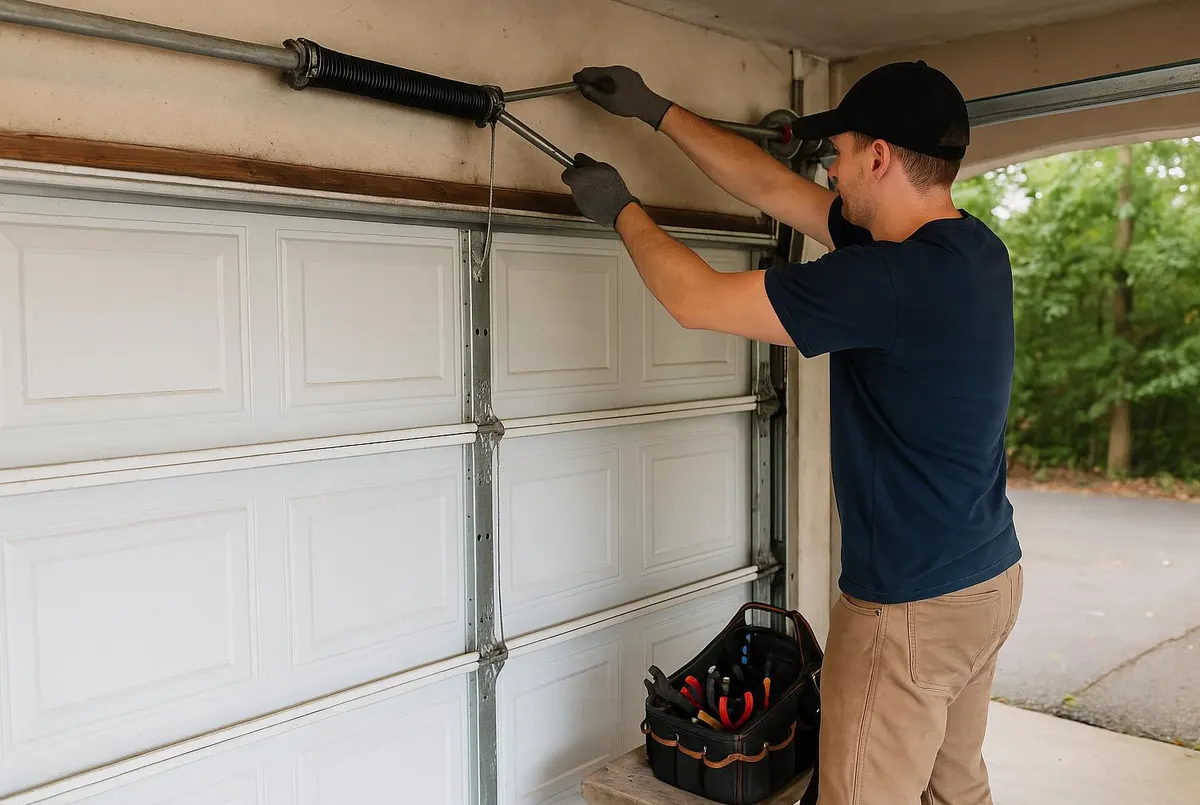
A technician gets a call from a homeowner near Magic Mountain Pkwy whose spring just snapped for the second time in three years. While he's up on the ladder, the homeowner mentions his brother-in-law runs a small warehouse off the freeway, and that door 'just rolls up and down all day and never breaks.' Then he asks why his own garage door can't be built the same way. That question starts a lot of arguments at the dinner table, and it's worth settling with facts instead of guesses.
They're Built for Completely Different Jobs
A residential garage door is designed around a car, a bit of storage, and maybe one or two openings a day. A commercial or warehouse overhead door is designed around constant use — forklifts, delivery trucks, employees in and out all shift long. That difference in purpose drives almost everything else about how the two doors are built.
- Gauge of steel: Commercial doors typically use heavier-gauge steel panels, sometimes with reinforced ribs, because they take more physical impact and need to hold up under higher wind loads on larger buildings.
- Cycle rating: Residential torsion springs are usually rated for several thousand cycles — enough for years of normal household use. Commercial springs and operators are rated for tens of thousands of cycles because the door might open and close dozens of times a day.
- Track and drum size: Warehouse doors often use larger diameter drums and heavier tracks to support bigger, heavier door sections, especially on wide openings.
- Operator type: A home garage usually runs on a chain or belt-drive opener sized for one door. Commercial settings often use jackshaft operators mounted beside the door, which keep the ceiling clear for other equipment and handle continuous duty cycles without overheating.
None of this means a commercial door is simply a 'better' version of a residential one. It's built to survive a workload that a house doesn't generate, and that extra strength comes with extra weight, extra cost, and different maintenance demands.
Why the Brother-in-Law's Door Isn't Breaking Down
It's not that commercial doors are magic — it's that they're matched to their job and usually on a maintenance contract. A warehouse operator who ignores a worn cable or a failing roller risks a line shutdown, a safety incident, or a door that won't open for incoming trucks. That pressure means commercial doors typically get inspected and serviced on a set schedule, often monthly or quarterly, by someone checking cables, bearings, and alignment before anything fails.
A home garage door, by contrast, often gets attention only when something already sounds wrong — a grinding opener, a door that jerks on one side, or a spring that lets go with a bang while someone's getting the car out for work. The hardware on a house door isn't necessarily weaker for its job; it's just more likely to be neglected because nobody's watching it the way a facilities manager watches a warehouse door.
What This Means for Maintenance at Home
You don't need warehouse-grade steel on a residential garage, but you can borrow the warehouse mindset: catch small problems before they become stuck doors or broken springs. That matters more here than in milder climates, because the Santa Clarita Valley puts real stress on garage door hardware:
- Hot inland summers cause metal components to expand and contract, which can loosen hardware and dry out lubricant on tracks and hinges faster than in a coastal climate.
- Dry seasons bring dust and, at times, wildfire smoke, both of which work into rollers, tracks, and opener sensors and can cause binding or false safety-reversal signals.
- Winter rain can reveal gaps in weatherstripping or expose a garage to moisture if the door isn't sealing properly, which is more noticeable in homes that have had earthquake retrofits adding weight or new bracing to the door assembly.
A seasonal check — tightening hardware, lubricating rollers and hinges, testing the balance, and clearing dust from tracks and sensors — does for a home door what a service contract does for a commercial one. It won't turn your garage into a warehouse operation, but it will keep the door working the way it's supposed to and catch a fraying cable before it becomes a Saturday morning emergency.
When to Call Valencia Door & Opener
If a spring has already broken, if the door is heavier or louder than it used to be, or if you're simply not sure your home door's hardware matches its actual use, that's the point to call in a professional rather than guess. Valencia Door & Opener handles both Garage Door Maintenance and Spring Replacement for homes throughout the Santa Clarita Valley, and can tell you honestly whether your setup is sized right for how your household actually uses the garage — no upsell to commercial-grade parts you don't need.
If you're in Valencia, Stevenson Ranch, Newhall, Canyon Country, or anywhere nearby and want a straight answer on what your garage door actually needs, call Valencia Door & Opener for a local inspection today.