
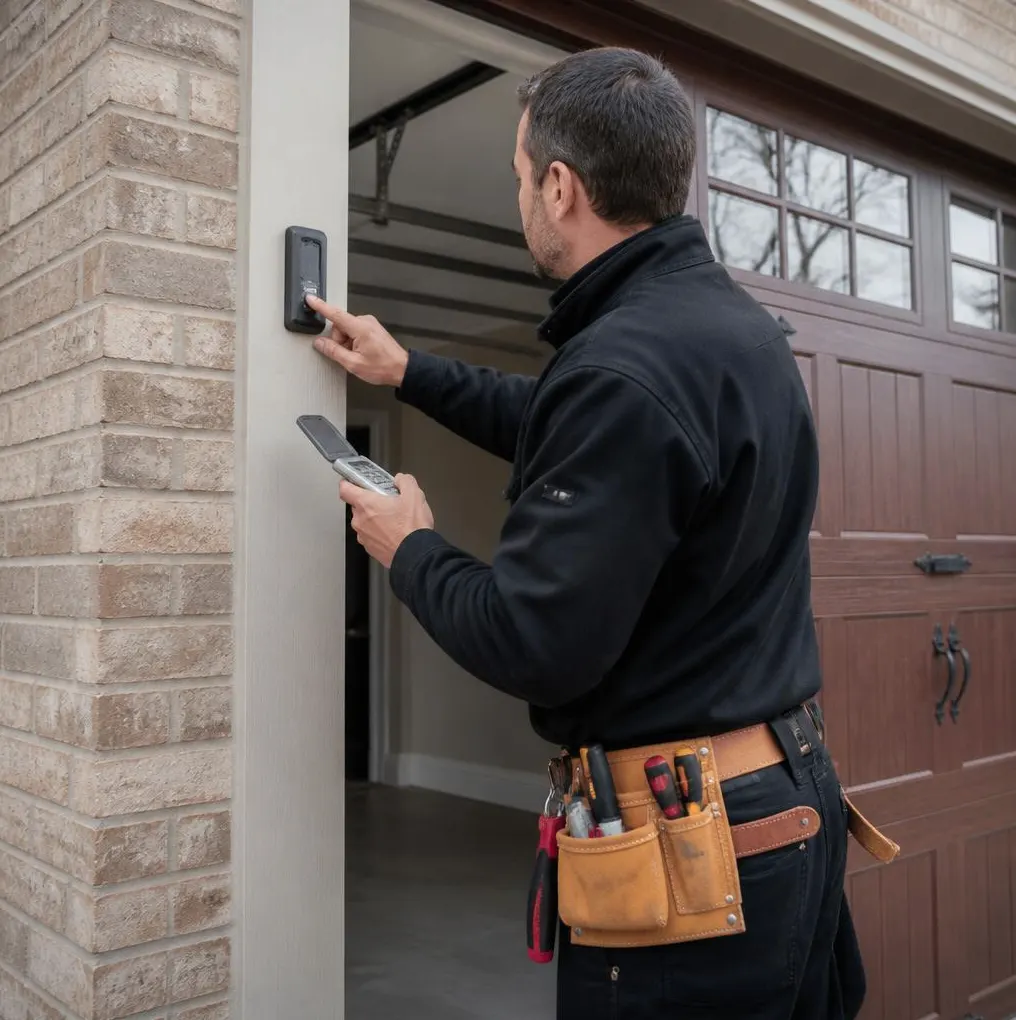
The Mistake: Just Pressing the Button
Most buyers walk into the garage, hit the opener remote, watch the door glide up and down once, and move on to the kitchen. It's tempting because it feels like proof the system works — the door moved, nothing fell off, done. But a garage door can open and close smoothly on a bad day and still be hiding worn springs, a misaligned track, or a safety sensor that hasn't functioned in years. A general home inspector often does the same thing: one cycle, a glance at the panels, and a checkmark. They're covering a roof, foundation, electrical panel, and plumbing in the same visit, and the garage door rarely gets more than sixty seconds.
If you're buying a home with an attached garage, it's worth spending ten extra minutes doing your own walkthrough. Here's what to check and what it means if something fails.
The Walkthrough Checklist
1. The Balance Test
Disconnect the opener by pulling the manual release cord (usually a red handle hanging from the trolley), then lift the door by hand to about waist height and let go.
- Passes if it stays roughly where you left it.
- Fails if it drops suddenly or shoots upward — that means the torsion or extension springs are worn, mismatched, or sized wrong for the door's weight. An unbalanced door puts extra strain on the opener motor and can shorten its life fast.
2. Spring Condition, Not Just Spring Presence
Look at the spring(s) above the door (torsion) or along the upper tracks (extension). Check for rust, flattened or touching coils, or a visible gap where a spring has separated.
- Surface rust alone isn't a dealbreaker, especially on older homes, but pitted or flaking rust combined with inconsistent coil spacing suggests the spring is near the end of its service life.
- Springs are rated by cycle count, not years, so a door used heavily will wear them out faster regardless of the home's age.
3. Bottom Panel and Seal
Crouch down and look at the bottom few inches of the door and the rubber weatherstrip along the base.
- Rust, bubbling paint, or soft/spongy panel material at the bottom usually means water has been sitting against it — common after repeated winter rain exposure if the driveway slopes toward the garage.
- A cracked, flattened, or missing weatherstrip means dust, dry-season debris, and wildfire smoke have likely been getting into the garage, which matters if anything stored inside is sensitive to air quality.
4. Track Alignment and Rollers
Run your eyes down both vertical tracks from floor to ceiling.
- Gaps between the rollers and the track, visible bends, or tracks that have pulled away from the wall bracket point to either age, a past impact, or shifting from ground movement — worth noting in earthquake-prone areas where garage framing can settle or flex over time.
- Rusted or worn rollers cause grinding or popping noises during operation, which is a maintenance issue now but a breakdown risk later.
5. Auto-Reverse Safety Test
This is the one inspectors skip most often. Place a 2x4 board flat on the ground in the door's path and close it.
- The door should reverse immediately on contact.
- If it doesn't reverse, or reverses only after crushing partway through, the safety sensors or force settings are not functioning correctly — a real hazard if kids, pets, or cars use that garage.
6. Photo-Eye Sensors
Look for the two small sensor eyes low on either side of the track, a few inches off the floor. Wave your hand or a broom between them while the door is closing.
- The door should stop and reverse the moment the beam is broken.
- If nothing happens, the sensors may be unplugged, misaligned, or dead — sometimes disconnected by a previous owner who got tired of false triggers, which is more common than people expect.
7. Opener Age and Battery Backup
Check the brand and model sticker on the opener motor unit.
- Openers older than fifteen years often lack modern safety reversal technology and rolling-code security, both worth factoring into your plans for the property.
- No battery backup means the door won't open manually during a power outage unless the manual release is used — worth knowing heading into the rainy season when outages are more likely.
8. Wall Bracing and Anchor Points
Check where the track brackets and header bracket attach to the framing, not just the door itself.
- Loose bolts, stripped wood, or missing reinforcement bracing are signs the door isn't properly secured — a bigger concern in a region where garage doors benefit from being braced against lateral movement.
- If the garage has clearly been retrofitted with added bracing or steel reinforcement, that's a good sign the previous owner took earthquake preparedness seriously.
Reading the Whole Picture
No single failed item means walk away from the house. A worn spring or a dead sensor is a fixable, budgetable repair, and national ranges for spring replacement or sensor repair are modest compared to most other home systems. What matters is knowing before closing what you're looking at, so it becomes a negotiating point or a line item in your move-in budget instead of a surprise the first time the door won't open on a rainy morning.
When to Call Valencia Door & Opener
If your walkthrough turns up a door that won't balance, a sensor that doesn't trigger, or a spring that looks compromised, that's the point to bring in a technician before you move forward. Valencia Door & Opener can run a full inspection covering spring tension, track alignment, and opener safety function, and handle spring replacement or opener repair on the spot if something needs it. For homes with older openers, they can also talk through installation options that add battery backup and modern safety reversal — useful heading into the wet season.
If you're buying a home in Valencia, CA or anywhere in the Santa Clarita Valley, call Valencia Door & Opener before closing day to get the garage door checked by someone who does this every day, not just once a visit.