
The Moment You Notice It
You're backing out of the driveway and the dog slips past your leg, trotting under the garage door just as it starts to close. You hit the remote, it stops, everyone's fine — but your stomach drops. Or maybe it's your toddler, standing on tiptoe to mash the wall button like it's a game, and the door groans down while you're still carrying groceries through it. These are the moments that make parents in Valencia start paying attention to a machine they've otherwise ignored for years.
What Actually Goes Wrong
A garage door is one of the heaviest moving objects in most homes, often 150 to 400 pounds, and it's held up by a spring system under serious tension. When something in that system fails, it rarely fails gently. The most common safety breakdowns are:
- Auto-reverse sensors (photo eyes) that are dirty, knocked out of alignment, or unplugged. These two small sensors near the bottom of the track are supposed to stop the door if anything breaks the beam. Dust from a dry Santa Clarita Valley summer, pollen, or a stray soccer ball can coat or nudge them just enough that they stop working — and you won't know until the door closes on something it should have stopped for.
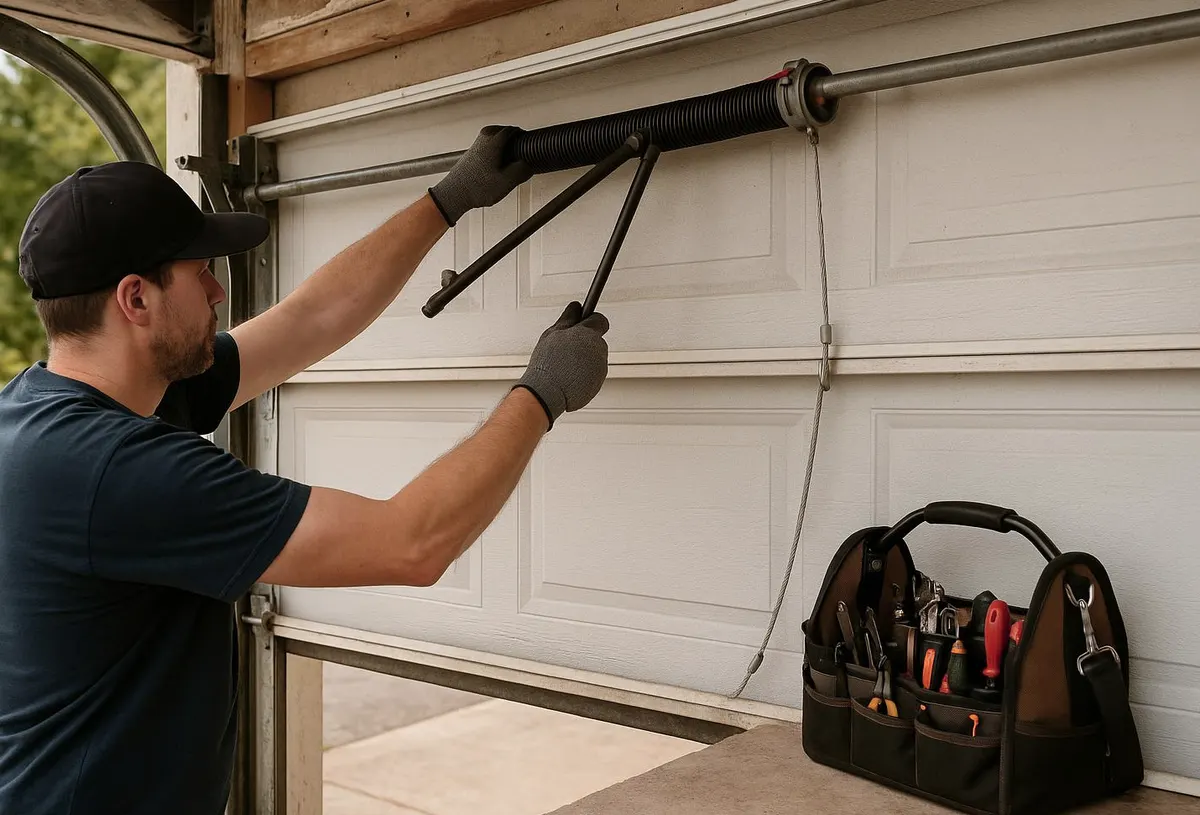
- Worn torsion springs that let the door drop fast instead of closing smoothly. A door that's supposed to take 8-10 seconds to close but suddenly drops in half that time is a door whose spring is losing tension unevenly, and that changes how much force is behind it if it contacts a hand, a paw, or a bike handlebar.
- Older doors without pinch-resistant panels. Many doors installed years ago have flat seams between panels that can pinch small fingers as the sections fold. Newer doors are designed to prevent this, but a lot of Santa Clarita Valley homes still have the older style.
- Remotes and wall buttons kept within reach of kids. This isn't a mechanical failure, it's a habit failure, but it's one of the most common ways young children end up too close to a moving door.
How Badly It Can Go
The injuries that happen here aren't abstract. Fingers and hands get caught in panel seams. Pets get struck by a door that didn't reverse because the sensor was blocked by leaves or dust. A spring that lets go under load can cause the door to drop suddenly with real force behind it. None of this requires a dramatic mechanical failure — it usually just takes one safety feature that quietly stopped working months ago, combined with one moment of bad timing.
The Checks That Actually Prevent It
- Run the auto-reverse test monthly. Place a roll of paper towels or a cardboard box flat on the ground where the door closes. Close the door. It should reverse the instant it touches the object. If it doesn't, stop using the door until the sensors are realigned or replaced.
- Wipe down the photo-eye sensors every few weeks during dry, dusty months. Wildfire smoke and Santa Ana wind debris settle on everything, including the small plastic lenses low on each side of the track. A soft cloth is usually enough.
- Watch the closing speed. If the door seems to drop faster than it used to, or makes a bang at the bottom, treat that as a spring issue, not just noise.
- Move remotes, keypads, and wall buttons out of toddler reach, and set a house rule that the opener isn't a toy, even for older kids.
- Keep pets' paths away from the door's swing zone when you're opening or closing it, especially during busy departures when no one's watching the door closely.
- Before winter rains arrive, have the full system checked — tracks, rollers, and the opener's force settings all shift slightly with temperature and humidity changes, and a door that was fine in August can behave differently once the wet season starts.
When to Call Valencia Door & Opener
If the cardboard test fails, if the door's closing speed has changed, or if you've got an older door with flat panel seams and young kids or pets in the house, it's worth having it looked at rather than waiting. Our Garage Door Maintenance visits cover sensor alignment, spring tension checks, and force-setting adjustments on the opener — the exact things that quietly drift out of safe range over a year of Valencia's dry summers and wet winters. If a spring is already showing uneven wear, our Spring Replacement service addresses that directly rather than patching around it.
If you've noticed any of the warning signs above, call Valencia Door & Opener and we'll come take a look — serving Valencia, Santa Clarita, Stevenson Ranch, Castaic, Newhall, Canyon Country, Saugus, and Agua Dulce.